720

autor
infoFerma
distribuie


publicat
2026 April 27

The area dedicated to organic agriculture in Romania has increased by 160% over the past decade, reaching more than 780,000 hectares in 2024 — equivalent to 6% of the country’s total agricultural land.
As of January 1, 2026, the European TRACES registry listed 15,262 operators with valid certificates, from a total that recorded a net increase of 2,017 new entries in 2024 compared to 2023.
Timiș County leads the ranking with 883 operators, followed by Bihor (843), Sălaj (805), and Cluj (791).
The structure of organic production remains dominated by field crops and feed production
Organic production in Romania continues to be largely concentrated in field crops and feed-related activities.
A total of 5,958 operators cultivate forage crops, 3,411 produce alfalfa, and 3,284 manage permanent grasslands.
Wheat, corn, and sunflower are also present across thousands of certifications.
However, the core segment of higher value-added products — including honey (1,108 operators), milk (1,083), plums (1,215), and apples (877) — shows that Romania’s organic sector has already achieved real diversification, not just on paper.
The structural challenge remains unchanged
Domestic demand remains insufficient to absorb the available production.
Higher prices for organic products compared to conventional alternatives, combined with low consumer awareness, mean that a significant share of Romania’s organic output is exported, often without allowing farmers to fully benefit from the price premium that a stronger domestic market could generate.
Romania nevertheless gained European recognition in 2025, when Herta Bio Apicole won second place at the European Organic Awards.
A signal of caution from 2025
A note of caution comes from the sector’s performance in 2025.
After the record increase of 2,017 new operators in 2024, the net balance in 2025 was nearly zero — with 1,726 new entries compared to 1,756 exits.
Nearly one-third of operators entering the organic certification system abandon it in less than three years, often due to bureaucracy and a lack of practical support during the transition period.
The long-term consolidation of the sector will depend not only on attracting new operators, but also on reducing this abandonment rate.
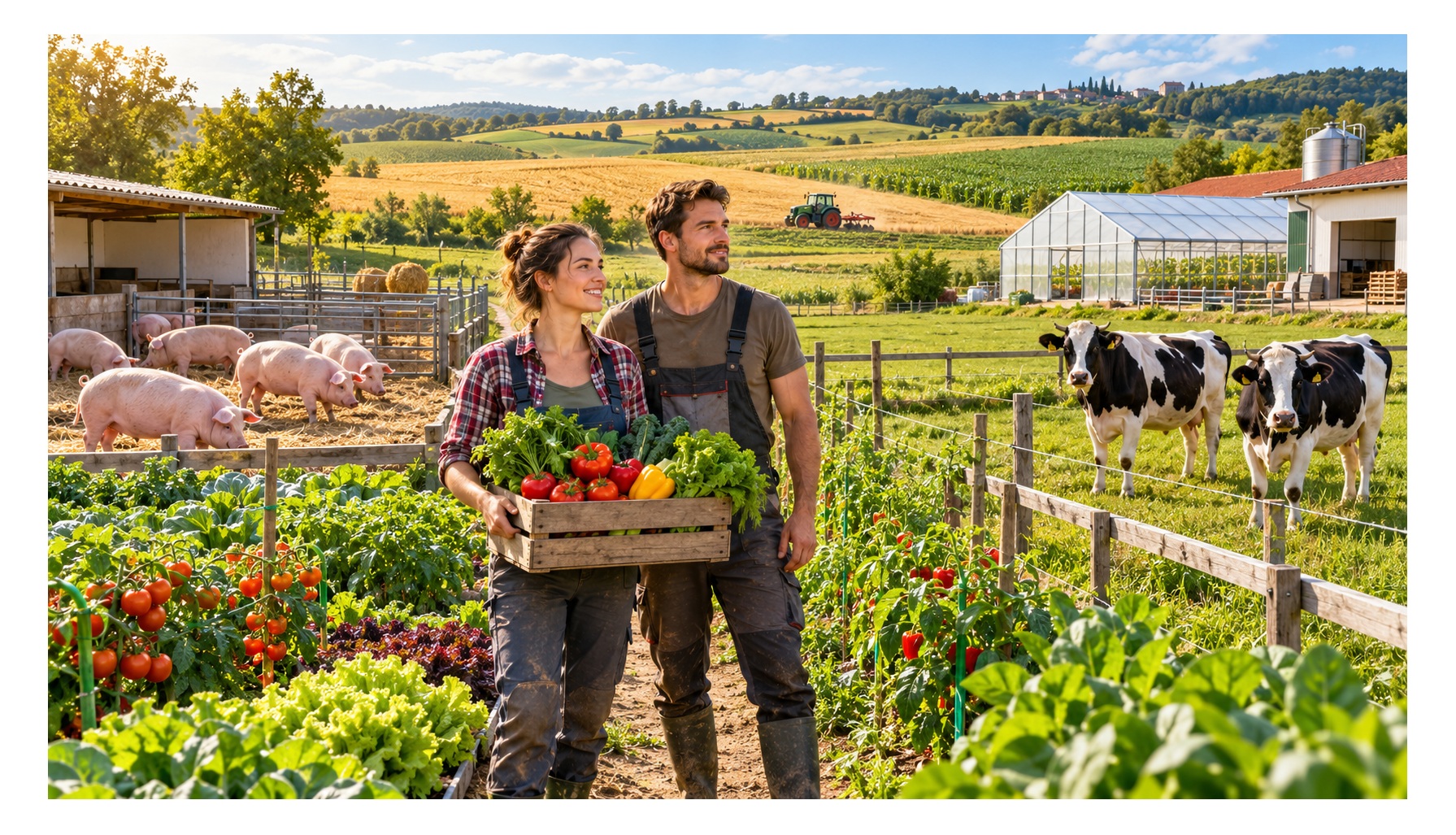
(Photo: Freepik)
aflat
read