367

autor
infoFerma
distribuie


publicat
2026 September 23
The National Sanitary Veterinary and Food Safety Authority (ANSVSA) is providing a series of clarifications regarding the Action Plan for the sheep and goat sector, amid contradictory information that has emerged in the public domain concerning discussions with the European Commission.
According to ANSVSA, the plan was developed in accordance with the requirements of European legislation and following consultations and recommendations made by European experts from EuVET.
The Authority states that the implementation of the plan does not require an additional vote or formal approval from the European Commission.
Timeline of the measures
According to ANSVSA’s statement, the main stages were completed in September.
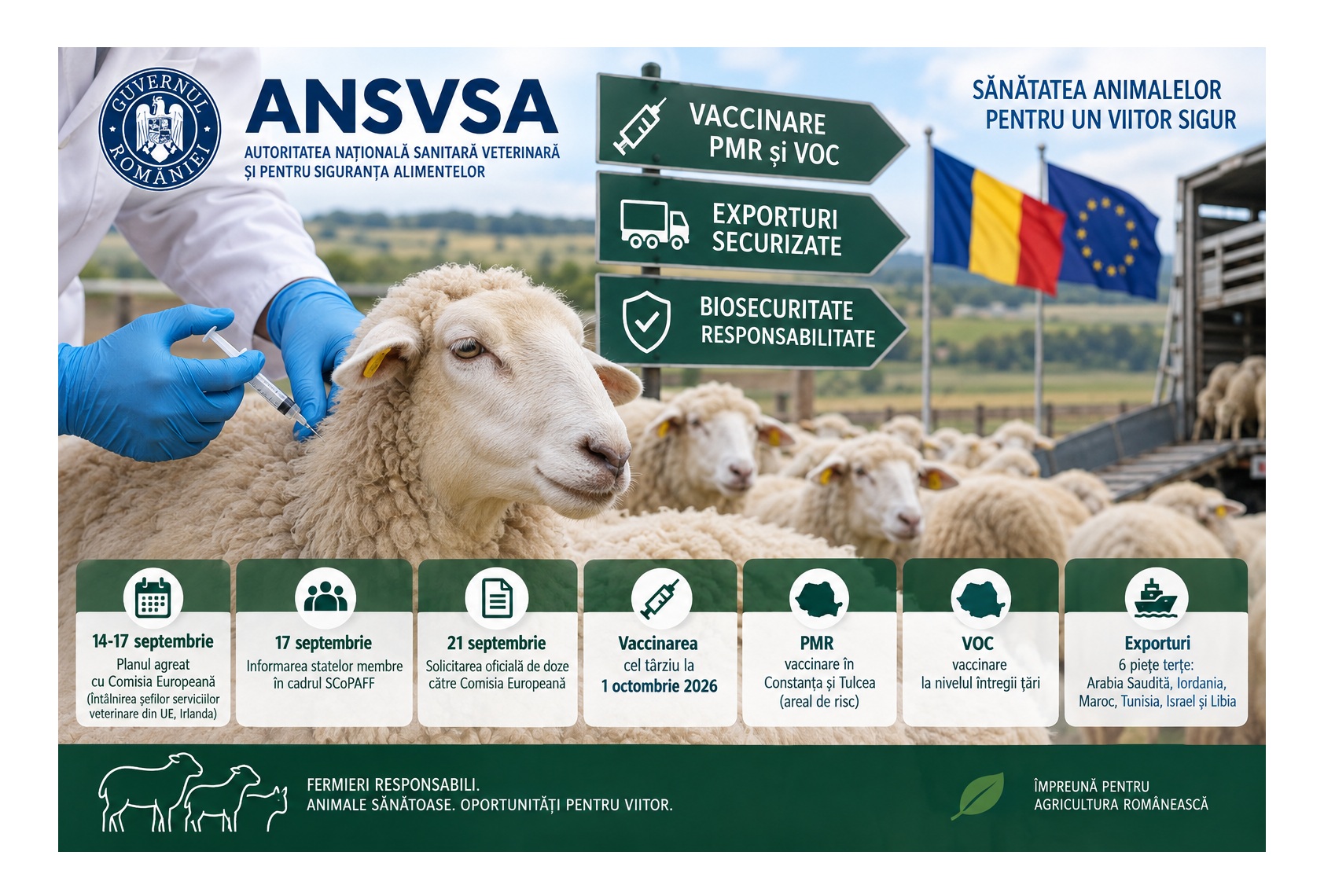
Between 14 and 17 September, the final version of the Action Plan and the request concerning vaccine doses were agreed with representatives of the European Commission during the meeting of the heads of veterinary services of the Member States, held in Ireland.
On 17 September, the other Member States were informed within the framework of the Standing Committee on Plants, Animals, Food and Feed (SCoPAFF).
Subsequently, on 21 September, ANSVSA says it officially submitted a request to the European Commission for the provision of the largest possible number of vaccine doses from the European Vaccine Bank.
At European level, Peste des Petits Ruminants (PPR) is classified as a Category A disease, which entails immediate control and eradication measures in the event of an outbreak. The European Commission also states that the rules governing vaccination against PPR are established under European animal health legislation.
Vaccination scheduled to begin by 1 October at the latest
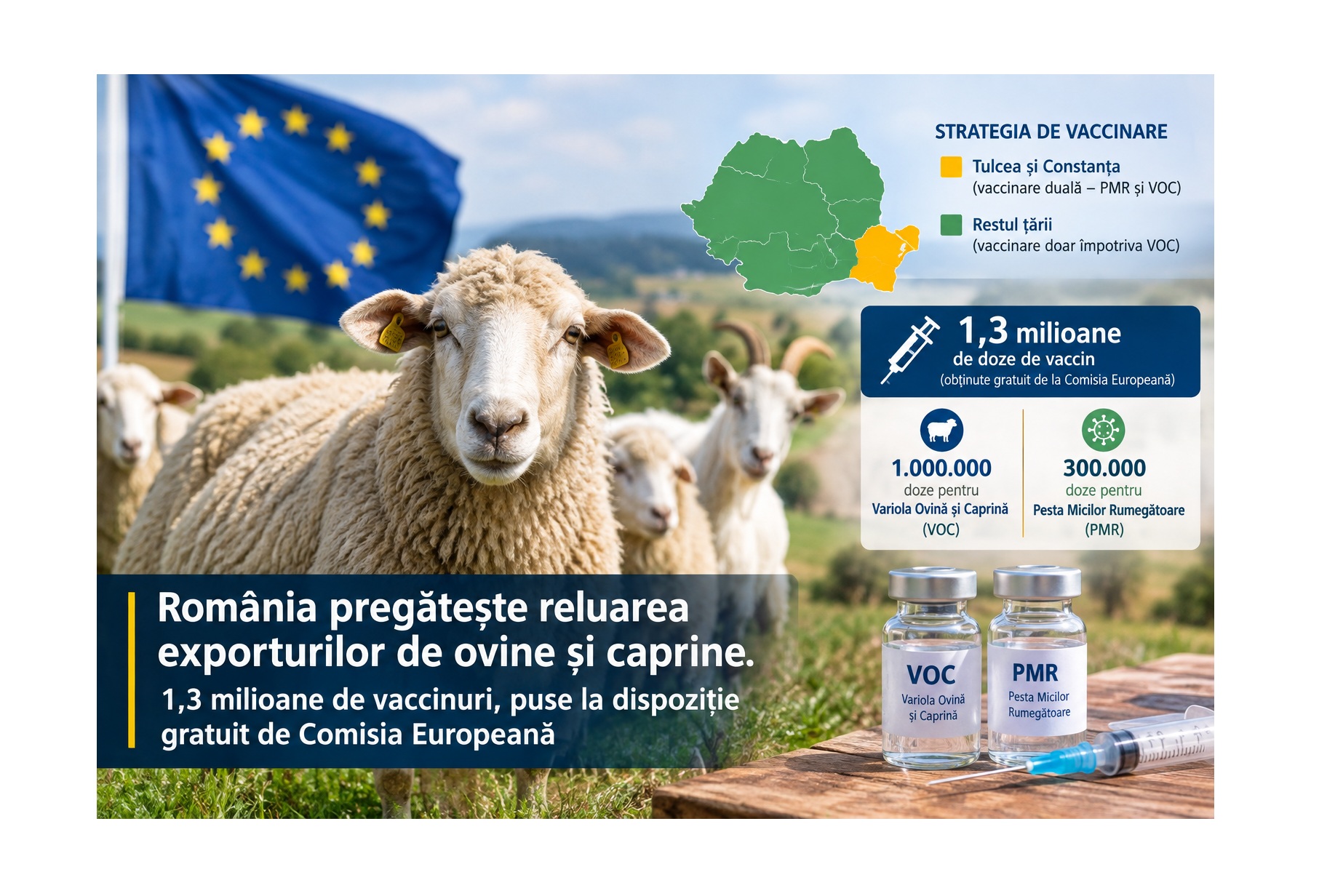
According to ANSVSA, the national vaccination campaign is expected to begin no later than 1 October 2026, immediately after the vaccine doses are received from the European Vaccine Bank.
At the same time, the Authority announces that the administrative procedures for procuring the additional doses required for the campaign are being accelerated.
The vaccination strategy provides for:
- for Peste des Petits Ruminants (PPR), vaccination exclusively in the counties of Constanța and Tulcea, considered a risk area for Dobrogea;
- for Sheep and Goat Pox (SGP), vaccination throughout the country.
ANSVSA states that vaccination will be carried out for all animals, in accordance with the package leaflet of the vaccine product used.
Sheep and Goat Pox is likewise classified at European Union level as a Category A disease. The European Commission states that the disease can cause significant economic losses, including through reduced milk production, damage to the quality of wool and hides, and associated trade restrictions.
Live animal exports at the center of the measures
One of the objectives of the Action Plan is the resumption and stabilization of live animal exports, given that European animal health measures may impose restrictions on the movement of animals.
ANSVSA nevertheless emphasizes that a distinction must be made between live animals and meat and processed products.
According to the Authority, the Action Plan does not affect trade in meat, carcasses, milk, and dairy products originating from disease-free areas, and slaughtering and processing facilities may operate without restrictions in these areas.
With regard to live animal exports to third countries, ANSVSA says that diplomatic efforts have been undertaken to maintain bilateral agreements with six markets considered important for this sector:
Saudi Arabia, Jordan, Morocco, Tunisia, Israel, and Libya.
According to the Authority, following the implementation of the vaccination plan, exports to these destinations should be able to resume through direct maritime and air logistics corridors, under the conditions established by the applicable agreements and animal health requirements.
At European level, the rules governing the use of vaccination against Category A diseases also establish the conditions under which vaccinated animals and products derived from them may be moved.
ANSVSA: Biosecurity and combating illegal trade are essential
ANSVSA points out that the success of the plan also depends on compliance with biosecurity measures by farmers and economic operators.
The Authority specifically warns about clandestine animal movements and illegal trade, which it considers factors that may compromise the implementation schedule and the lifting of restrictions.
ANSVSA announces that it will continue working with farmers’ associations and veterinarians to implement the measures set out in the Action Plan.
European context
The measures adopted in Romania form part of the European framework for the control of transmissible animal diseases. In the case of PPR, the European Commission emphasizes that the disease can cause significant economic losses, including through trade restrictions, and that surveillance and rapid response capacity are essential.
In a European Commission presentation on the animal health situation in Romania, published in 2026, it is stated that Romania has implemented surveillance and control programs for PPR and Sheep and Goat Pox. The document notes that, in 2026, no confirmed outbreaks of Sheep and Goat Pox were recorded during the period under review.
ANSVSA states that it will provide further information as the situation evolves and implementation of the measures set out in the Action Plan progresses.
aflat
read