584

autor
infoFerma
distribuie


publicat
2026 April 24
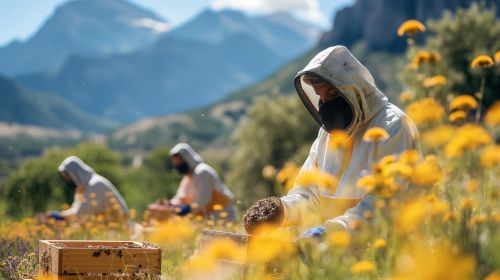
Romania ranks second in the European Union in terms of the number of bee colonies, after Spain, with approximately 1.47 million bee families managed by more than 40,000 registered beekeepers nationwide. On paper, it is a strong industry. In practice, 2025 brought the most severe crisis in the sector’s recent memory: honey production declined by approximately 70% compared to the annual average, while colony losses exceeded 50% in numerous counties.
The main cause is a chain of cumulative climate-related factors: the drought in the autumn of 2024 drastically reduced pollen availability, bees entered winter undernourished, and the frost in February and March 2025 severely affected the flowering of acacia trees — Romania’s main source of premium-quality honey. Rapeseed honey production was virtually nonexistent, while linden honey output was weak. The only crop that generated results was sunflower, and even those were modest, according to statements made by Răzvan Coman, President of the Beekeepers Association.
The production crisis overlaps with an older structural issue: more than 60% of Romanian honey is exported, mainly to Germany, Italy, France and Austria, but at wholesale prices that do not cover production costs. In 2025, beekeepers were forced to sell polyfloral honey for 8–9 lei per kilogram, below profitability thresholds. Many have abandoned the business.
In the long term, the sector does have support instruments available: Romania’s National Rural Development Programme (PNDR) 2023–2027 includes funding for the modernization of apiaries, while APIA provides subsidies for bee colonies. The real challenge, however, is adapting to an increasingly unpredictable climate and building direct sales channels that eliminate intermediaries and increase farmers’ margins.
(Photo: Freepik)
aflat
read