720

autor
infoFerma
distribuie


publicat
2025 October 28
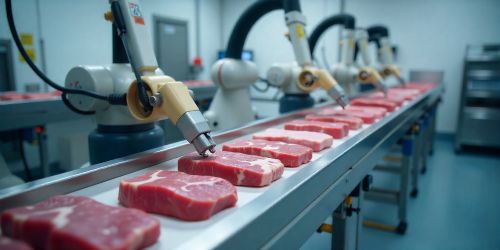
Automation — The New Standard in the Meat Industry
The meat industry is undergoing a profound transformation, where automation is no longer an option but a necessity for efficiency, food safety, and compliance with European regulations. Modern technologies now cover the entire chain — from the reception of animals, slaughtering, and cutting, to packaging and dispatch.
According to a FAO (2023) report, the implementation of automated systems in slaughterhouses can reduce processing time per unit by up to 35%, while simultaneously increasing cutting accuracy and the consistency of the final product. In Romania, major companies in the sector have invested in cutting robots, automatic visual inspection systems, and autonomous internal transport solutions.
A major advantage of automation is the ability to track every stage through digital traceability, including automatic labeling and QR codes compliant with EU requirements. These systems reduce contamination risks and allow for rapid product recalls in case of non-conformities.
Investments in automation are supported by European funds (AFIR, PNS 2023–2027), but they also require a strategic approach from companies regarding employee training and IT infrastructure adaptation. Integration with HACCP control systems and continuous monitoring turns automation into a key instrument for quality and safety.
(Photo: Freepik)
aflat
read