841

autor
infoFerma
distribuie


publicat
2025 November 24
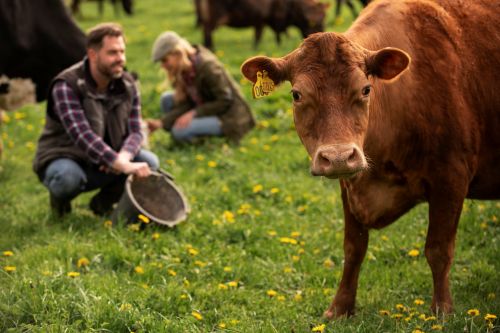
Beef cattle farming remains a sector with development potential in Romania, although the national herd remains modest in size compared with other EU Member States. According to INS (2024), the total cattle population stands at around 1.75 million head, with the segment specialised in beef production representing a small but stable share. Eurostat confirms that Romania remains below the EU average in terms of specialised herd density, yet benefits from natural resources that support future expansion of the sector.
European consumption trends indicate stable demand for beef, and DG AGRI – EU Agricultural Outlook 2024 projects a relatively steady market through 2030. For Romanian farms, key opportunities lie in extensive grazing systems, efficient use of pasture resources and the adoption of breeds with good feed conversion rates.
In terms of cost structure, European data show that specialised beef farms experience lower volatility than dairy operations, due to simpler production models and fewer operational risks. However, economic performance depends heavily on reproduction management, slaughter age and reliable market access.
Current agricultural policies under the PNS 2023–2027 support sustainable pasture management and investments in housing, genetics and animal welfare. Romanian farms can narrow the productivity gap with EU averages by adopting modern strategies and optimising pasture rotation, weaning weights and finishing performance.
With gradual investment and a focus on stable and predictable markets, beef cattle production can evolve into a solid and competitive direction for Romanian farms.
aflat
read