549

autor
infoFerma
distribuie


publicat
2026 March 12
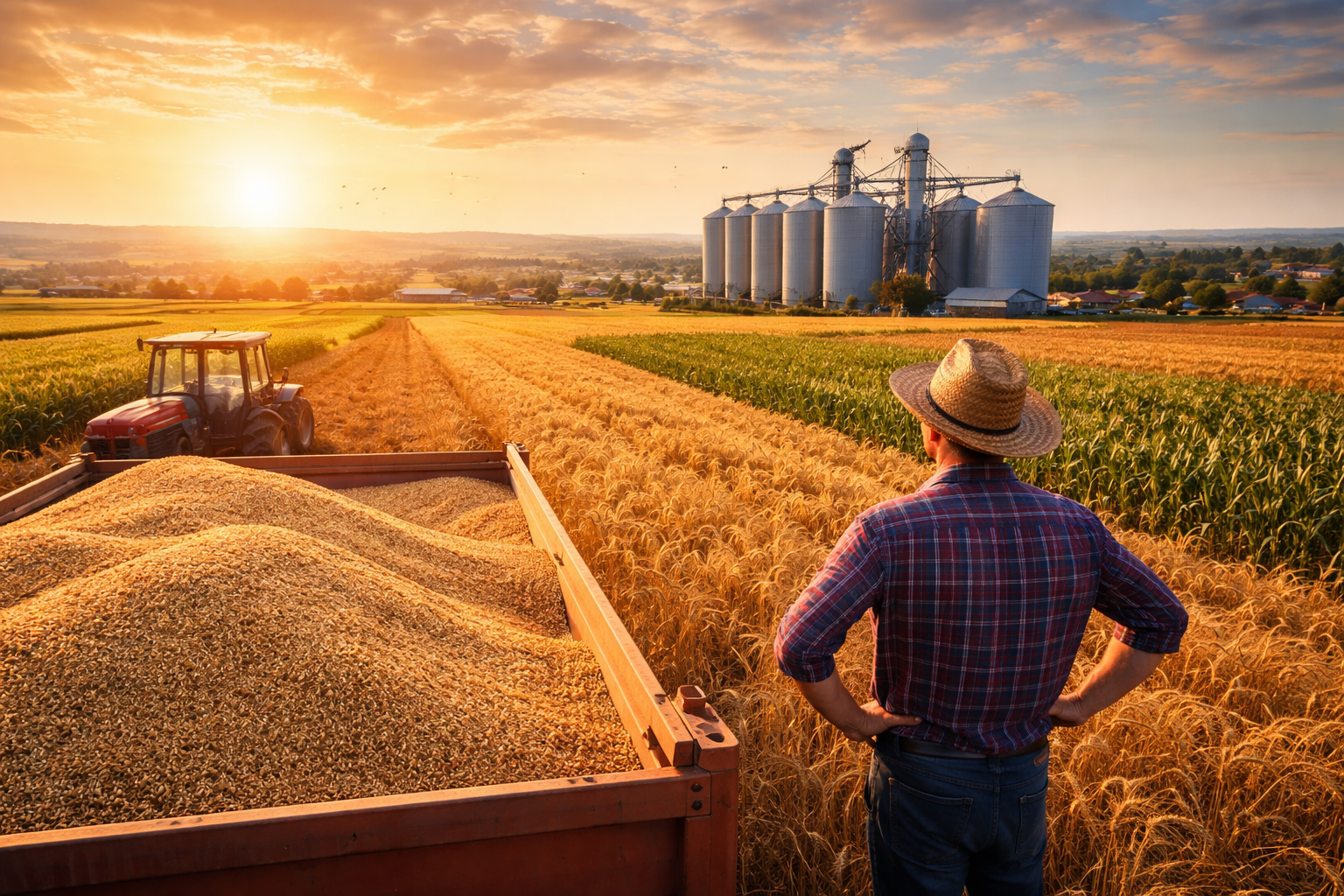
Romania is among the most significant agricultural powers in the European Union in terms of resources and production volumes. With approximately 13.3 million hectares of utilized agricultural area, the country ranks among the leading EU members by this indicator, and in favorable agricultural years cereal production frequently exceeds 25–30 million tonnes.
According to data published by Eurostat, Romania consistently ranks among the top European producers of maize and sunflower and is also one of the main grain exporters in the Black Sea region. However, the economic performance of Romanian agriculture remains below its agricultural potential.
The main explanation lies in Romania’s position within the agri-food value chain. A significant share of agricultural production is exported as raw materials—such as cereals, oilseeds, or live animals—while processed food products are imported in considerable quantities.
This structure of agri-food trade limits the economy’s ability to capture the added value generated by agricultural production. Industrial processing, logistics, and distribution are the stages where the economic value of food products increases significantly.
In this context, the development of the food industry and the integration of agricultural production into domestic agri-food chains become essential factors for increasing the economic value generated by agriculture.
(Photo: AI GENERATED)
aflat
read