755

autor
infoFerma
distribuie


publicat
2025 December 08
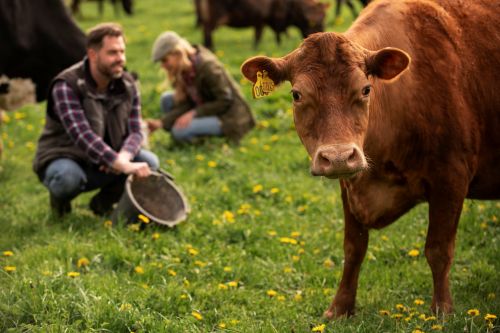
Young cattle represent the core production base for both beef and dairy farms, and current European trends point to significant structural shifts. According to Eurostat 2024, the number of bovines aged 1–2 years decreased by 4.1% across the EU, while Western Europe recorded a decline of over 6%, driven by high feed costs and climate-related pressures. Romania shows a more moderate reduction of around 2% (INS, 2024), although regional disparities are notable: Transylvania maintains a stable pace, while the southern regions report losses exceeding 7%.
The performance of young cattle is closely linked to average daily gain (ADG). DG AGRI – Beef Market Report 2024 indicates that top-performing European farms achieve ADG levels of 1,200–1,400 g/day, compared with an EU average of 950–1,050 g/day. In Romania, ANZ data show ADG values ranging between 700 and 900 g/day, depending on feeding systems and genetics. Optimising nutrition can shorten the fattening period by 30–40 days and reduce operating costs by 8–12%.
Mortality rate remains a critical indicator. In high-performing European farms, mortality among young cattle stays below 2%, while the estimated rate in Romania is 4–5% (ANZ, 2024). EFSA notes that elevated temperatures can increase mortality by 0.3–0.5 percentage points in farms lacking adequate ventilation.
On the beef market, the European Commission forecasts stable consumption in 2024–2025, at 10.4 kg per capita. Romania remains well below the EU average, at 4.5–5.0 kg per capita, which limits the ability of farms to integrate young cattle efficiently into local production chains.
(Photo: Freepik)
aflat
read