584

autor
infoFerma
distribuie


publicat
2026 March 30
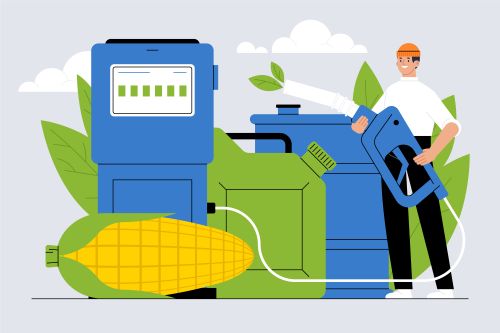
The Ministry of Agriculture and Rural Development has published, for public consultation, a draft Emergency Ordinance introducing a temporary support scheme for agricultural producers in the crop sector, in the context of the sharp increase in diesel prices in 2026. The initiative aims to reduce pressure on production costs amid volatility in energy markets and the direct impact on mechanized agricultural activities.
According to the draft, farmers will be able to purchase diesel at a reduced price, exempt from excise duties and VAT, intended exclusively for agricultural operations. The proposed mechanism is administratively simplified, with support granted based on certificates issued by APIA. The scheme applies to a standard consumption of 78 liters per hectare and targets farmers submitting area-based payment applications under current agricultural policies.
Data presented by the ministry indicate that diesel accounts for between 19% and 30% of farmers’ total costs, while mechanized operations can represent up to 40–59% of crop production costs. Under these conditions, the proposed intervention aims to stabilize operational costs and maintain the competitiveness of agricultural holdings, particularly in the crop sector, where fuel dependency is high.
The measure is part of a broader set of support policies aimed at adapting agriculture to recent economic pressures. However, the temporary nature of the scheme suggests a targeted approach focused on managing a short-term context rather than implementing structural reforms in the sector’s energy efficiency. In the absence of accelerated investments in more efficient agricultural technologies or alternative energy sources, dependence on diesel remains a critical factor in production costs.
The effective implementation of the scheme and its impact on farmers will depend on the clarity of the methodological rules and the speed of operationalization through APIA. At the same time, fuel price developments will remain a key determinant of the economic sustainability of the crop sector in 2026.
(Photo: Freepik)
aflat
read