949

autor
infoFerma
distribuie


publicat
2025 November 26
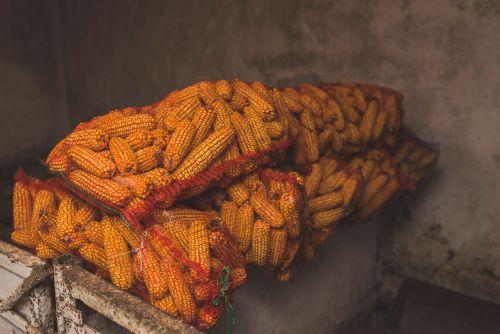
Maize remains Romania’s main crop in terms of both cultivated area and production volume, and the dynamics of the last two years indicate a moderate recovery after episodes of severe drought. According to the National Institute of Statistics (2024), the country’s maize output exceeded 9 million tonnes, a level close to the average of the past decade. The same data show strong regional disparities, with better results in the west and central areas and significant losses in the south-east, where soil drought continues to be a major factor.
At the European level, Eurostat confirms that Romania remains among the EU’s leading maize producers; however, climate volatility is affecting production predictability. The DG AGRI – Short-Term Outlook 2024 highlights that international cereal prices have entered a stabilisation phase, following the sharp fluctuations generated by the geopolitical context.
For Romanian farmers, the key issue remains the gap between the genetic potential of the hybrids used and the yields achieved in the field. The Ministry of Agriculture points out that the use of agrochemical mapping and variable-rate fertilisation technologies improves input efficiency, and farms adopting these practices achieve better results in difficult years.
Maize continues to be a strategic crop for farms, but competitiveness increasingly depends on technological management and adaptation to variable climatic conditions.
(Photo: Freepik)
aflat
read