572

autor
infoFerma
distribuie


publicat
2026 March 25
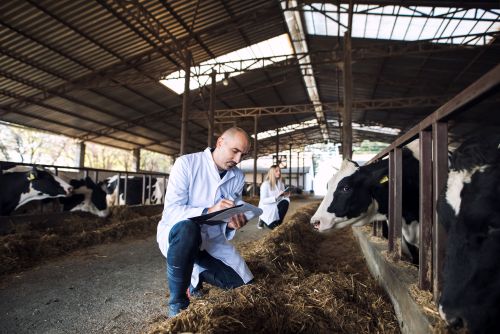
In livestock farming, differences in economic performance are primarily driven by productivity per animal. The same farm model can generate completely different results depending on the level of individual output, even when the cost structure is similar.
In dairy farms, the difference between 5,000 and 9,000 liters per head per year radically changes the cost of production. With an annual maintenance cost of EUR 1,500–2,000 per head, the cost per liter can vary between EUR 0.30 and over EUR 0.45 per liter. This difference of more than 30% directly determines the farm’s ability to generate profit.
In the swine sector, average daily gain and the duration of the growth cycle are essential indicators. An increase from 700 g/day to 900 g/day reduces the cycle length by 10–15 days, allowing for more production cycles per year and a more efficient use of production capacity.
In the poultry sector, productivity is measured by the ratio between final weight and feed consumption. Over a 35–40 day cycle, small performance differences can influence economic results by 5–10% per batch, which becomes significant on an annual basis.
In all cases, productivity per animal is not just a technical indicator, but an economic tool. Farms that optimize productivity reduce unit costs and increase their resilience to market fluctuations.
(Photo: Freepik)
aflat
read