708

autor
infoFerma
distribuie


publicat
2026 May 11
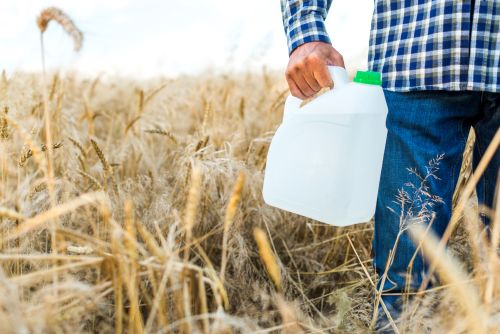
One of the most concerning developments for Romanian agriculture in recent months was the permanent shutdown of Azomureș in November 2025, which left Romania as the only country in the European Union without domestic fertilizer production. The immediate consequence became evident in February 2026, when the blockage of the Strait of Hormuz led to a 49% increase in urea prices within just a few weeks — a shock fully transmitted into the costs faced by Romanian farmers, with no internal buffer. There is now a signal of recovery: Romgaz has announced that it has reached an agreement in principle with the owners of Azomureș regarding the takeover of the plant’s operational activity through a business transfer, with the completion of negotiations estimated for the end of May 2026.
The stakes of the transaction are enormous for the agricultural sector. Azomureș, the plant located in Târgu Mureș, was, prior to its shutdown, the largest producer of nitrogen-based fertilizers in Romania and one of the most important in the region. Its production capacity was able to cover a significant share of the domestic demand for urea and ammonium nitrate — essential inputs for crops such as cereals, rapeseed, and sunflower. Romanian farmers purchased fertilizers from Azomureș at more competitive prices than imports, benefiting from simpler logistics and avoiding exposure to shocks on global raw material markets.
The takeover by Romgaz would address the main cause of the shutdown: dependence on the price of natural gas. As a domestic gas producer, Romgaz can supply Azomureș with raw materials at stable and predictable costs — a structural advantage compared to the scenario in which the plant purchased gas at international market prices. Acting Minister Tánczos Barna acknowledged that at the end of April 2026 there was still no finalized agreement between Romgaz and the owners of Azomureș, but negotiations have advanced significantly since then.
For farmers, the return of Azomureș to production will not be immediate — restarting a complex chemical plant requires time, investment, and recertification. However, the signal that Romania will regain domestic fertilizer production already matters: it reduces speculative pressure on imports and reopens the prospect of a supply chain more resilient to geopolitical shocks. Farmers who experienced the cost surge in the early months of 2026 understand directly what it means to be fully dependent on external markets for an input without which there can be no harvest.
(Photo: Magnific)
aflat
read