582

autor
infoFerma
distribuie


publicat
2026 April 29
Sustainability has ceased to be an abstract concept for Romanian farmers — it is becoming a condition for access to financing, contracts with modern retail, and export markets within the EU. The CAP Strategic Plan 2023–2027 allocates a significant share of its budget to environmental and climate-related interventions: eco-schemes, payments for agricultural practices beneficial to soil and biodiversity, and support for organic farming are directly linked to the basic subsidies that farmers receive annually from APIA.
Field data confirms that the transition is underway, although uneven. As of January 1, 2026, Romania has more than 15,000 certified organic operators, and the organically cultivated area has reached 780,000 hectares — representing 6% of total agricultural land. Farmers who adopt crop rotation, reduce pesticide use, and manage manure efficiently not only comply with legislation, but also access additional premiums through eco-schemes and qualify for contracts with retail chains that have publicly committed to sustainability targets for 2027–2030.
Legislative pressure at the European level is intensifying. The Farm to Fork Strategy aims for 25% of EU agricultural land to be farmed organically by 2030 — Romania currently stands at 6%, indicating a significant gap. Although targets were moderated following pressure from European farmers’ organizations in 2024, the direction remains unchanged: farms that cannot demonstrate sustainable practices will be at a disadvantage in accessing funding and markets in the coming decade.
Romania’s real competitive advantage in this context is its soil. Large agricultural areas with relatively lower historical pollution compared to Western Europe provide a favorable starting point for conversion to organic or regenerative practices. Farmers who understand that sustainability is not an additional cost, but a long-term asset, are positioning themselves today for the market of tomorrow.
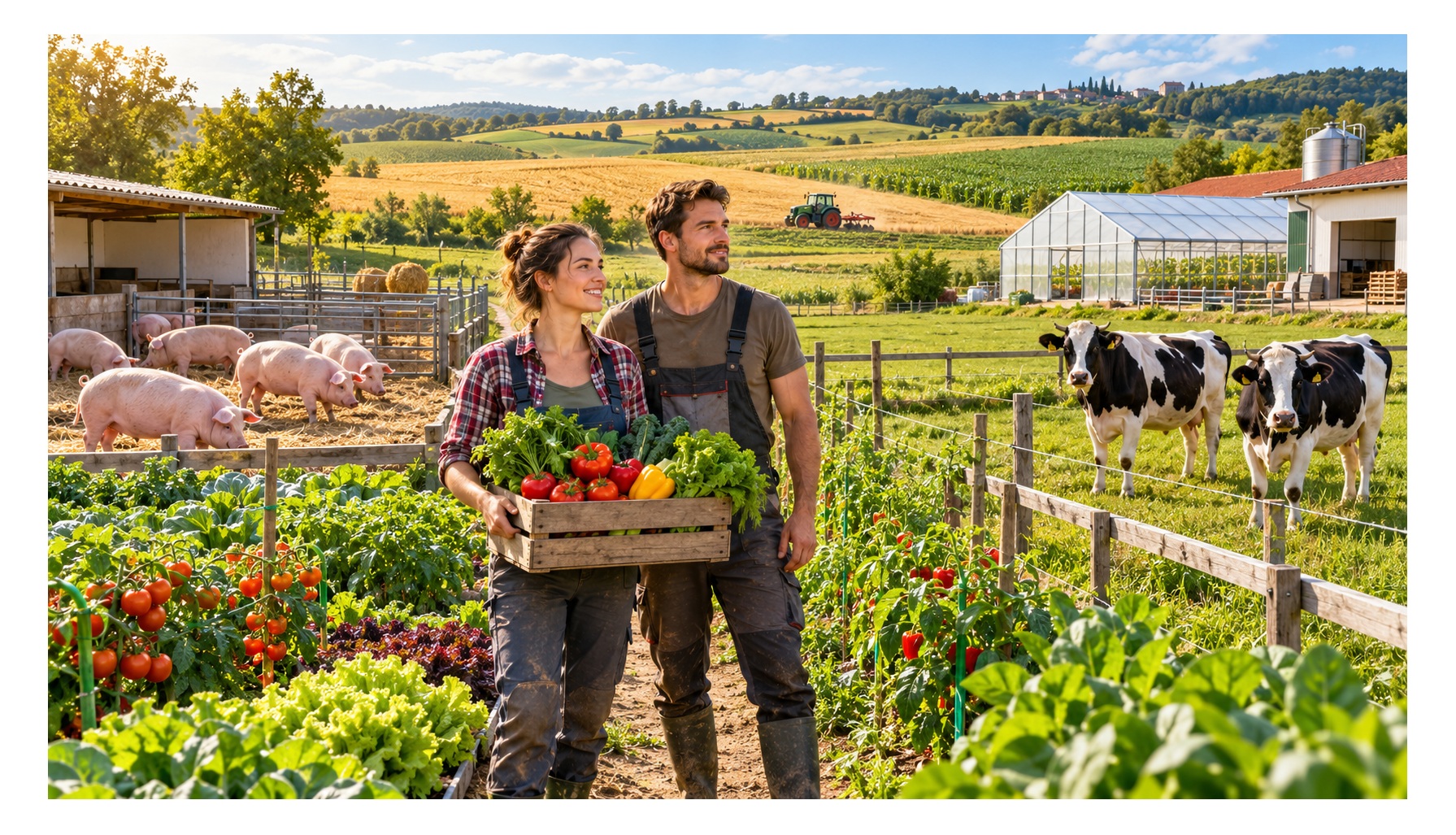
(Photo: Magnific)
aflat
read